Exercise Ranked Fifth in My Divorce Recovery Study. Here’s What Ranked Higher.

Updated: 6 days ago
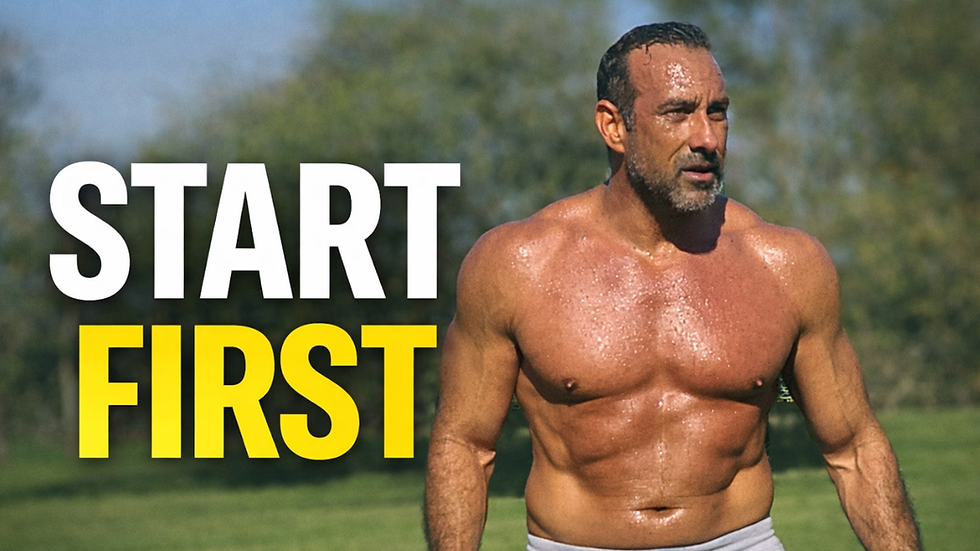
When men go through a breakup, our go-to recovery method is to kick our own ass. We work out. But how effective is exercise when you have a broken heart? How does it rank compared to other recovery strategies? Is it first, second, third?
I did a quality-of-life study on over 700 divorced and divorcing men, and exercise came in fifth in my comparisons. Men who exercised at least five times a week scored about one standard deviation higher in quality of life than men who didn’t exercise. That’s a substantial difference. But if exercise came in fifth, what were the four factors that ranked above it?
These are differences between groups in my survey, not proof that any one factor caused better recovery. The factors can overlap. Keep that distinction in mind as we go through the numbers.
Start with your energy
When you’re stuck in depression, the very idea of getting up and exercising can feel daunting. Completely unrealistic. When I consult with men, one of the first things I ask is when they last had a physical. I want them to discuss their sleep, depression, sexual health, and symptoms that might warrant checking testosterone with a qualified clinician.
Stress, poor sleep, illness, and other health problems can affect your energy and testosterone. If you’re over 40 and feel lousy, don’t just write it off as getting older. Talk to your doctor about the symptoms, even if a previous test was “in range.” That does not automatically mean you need testosterone treatment. A diagnosis of testosterone deficiency requires symptoms and consistently low levels, generally confirmed with repeat morning blood tests. [1]
The point is to find out what’s going on. There may be treatable reasons your sleep, energy, focus, or libido has gone to shit. Yes, that includes losing your morning wood.
Exercise is what we know. It’s measurable, and there’s a shitload of reasons to do it. Look better, build strength, grow confidence, gain clarity, get laid. All valid reasons. But how much does it actually help? And how do you even begin when just getting your ass off the couch feels impossible?

The ranking reflects my reported survey comparisons, not a controlled test of five treatments.
1. Acceptance: stop waiting for her to change her mind
The strongest difference in my recovery comparisons was acceptance. To give you perspective, the exercise comparison was about one standard deviation. Acceptance, including embracing your new role as a single man, was associated with a difference of about two and a half standard deviations.
I define acceptance as the moment you stop building your decisions around the possibility that she might change her mind. It’s basically you calling your own shots. The moment you do that, your ass realizes you’re breaking the chain of command. You let your absence be felt, and you feel empowered.
How do you start? You stop explaining yourself unnecessarily and start saying no. When I’m with a client who’s having trouble coping, that’s often where we begin.
One client happened to get a text from his ex while we were in a consultation. At first, he was reluctant to say no. His initial reaction was to bargain. But he felt better after setting a boundary.
I didn’t tell him to be a dick. That’s not my style. Because the favor involved his son, I encouraged him to compromise. Disrupting his son’s morning routine just to make a point would have been a hollow victory. Necessary communication about your kids still matters. Explaining every personal decision to get her approval is something else.
Acceptance is the start, not the endgame. The endgame is getting a better life without having to answer to her about everything. You’ve got freedom, and you’ve got baggage. It’s you standing up for yourself and realizing that saying no is easier than you thought. It’s making your decisions without compromising in areas where compromise is no longer necessary.
The first time you say no can feel like an adrenaline rush. Soon, you may realize that her approval isn’t as valuable to you as you thought. Try it. When an explanation isn’t necessary, don’t turn your boundary into a presentation she has to approve.
It’s about embracing your new life. The less you organize your personal decisions around her, the more room you have to move with purpose and respect your boundaries. You drop an old obligation and begin saying yes to something else. You find your own direction. With that, you learn there’s life, actually a good life, after your ex.
2. Self-love: give yourself something to build
The second factor was loving yourself. I use a coaching metaphor I call the suffering formula: how much you love your ex divided by how much you love yourself. It’s a way to think about where you’re putting your energy, not a validated mathematical formula.
Men in recovery focus on getting over their ex. The problem is that this can feel like working in series. To get from A to C, you have to get through B first. What if you work in parallel and go around B? You can start building a life you like while you still have feelings for her.
As you begin liking yourself more, the pain can take up less room. How you do that is another thing. Gain confidence. Don’t take every loss personally. Lose your pride and look for growth.
Men who disliked themselves averaged approximately 52 on the quality-of-life measure. Men who loved who they were averaged 75. That’s a 23-point difference, or almost two standard deviations in my comparisons.
In the same study, I asked, “Who’s a famous person or character you admire or want to be more like?” Men who gave a specific answer scored higher than guys who answered “no one” or “myself,” as if admitting they admired someone came at a price.
You know what I see in that? Pride. And I fucking hate the kind of pride that keeps a man guarded. Admitting you admire someone is not saying that person is better than you. Refusing to acknowledge anyone else’s strengths can keep you from learning.
Get specific. Is it someone’s confidence, how they carry themselves, or their communication style? Study their conduct. Don’t confuse respecting others with weakness. You want to practice self-love? Lose that guard. Show some vulnerability. No matter how good you are, you can learn from someone. Don’t beat yourself up over it either.
Acceptance and self-love go hand in hand. When getting her back is the only future you can picture, accepting the divorce feels like giving up on your destiny. That’s why you need direction, purpose, and an honest understanding of your needs. Your wants may still be the same, but your needs have changed.
She left, but you’re still trying to get a good performance review.
Doesn’t work like that.
3. Dating success: the success part matters
The third is huge: success in dating. Not just dating. Dating success. If you go out there and every experience makes you feel worse about yourself, it can backfire.
Dating means different things to different people. It can be casual or long term. But jumping from one relationship straight into another can mean dragging the same baggage into a new situation before you’ve dealt with it.
I’m talking about giving yourself permission to connect with people again. If casual sex goes against your values, don’t force it. Build friendships. Be honest about what you want and what you’re ready for. Some of my guys find it empowering to choose friendship with a woman who’s attracted to them. The power is in having agency and being honest, not playing games with her.
While getting divorced, you’re gonna need friends. No better time than the present.
Look, there was a time when, just like you, I thought I was married to the most beautiful woman in the world. It was like I worshiped her. I never expected to see another woman naked. A lot of us weren’t wired that way anymore.
Then you get out there and realize you can date again. More importantly, you give yourself permission to date. I’m telling you, man, that can be a big-ass power boost. It can build confidence, and confidence gives you more room to find direction and purpose. You start feeling better about yourself.
4. Income: financial breathing room matters
Fourth is making more money. Men whose gross income was 30 to 50 percent lower after divorce averaged a quality-of-life score of 56. Those whose income was 30 to 50 percent higher averaged 73. That’s a 17-point difference, or about one and a half standard deviations in my comparisons.
Money may not buy happiness, but financial pressure affects where you live, what you can afford, and how much room you have to make decisions. That breathing room matters.
5. Exercise: start with “I fucking matter”
Now let’s get back to my original challenge: improving how you feel. Grab your phone or something to write with.
One concept I use in consultations is emotion regulation: changing how you’re feeling at a particular moment. I’ve seen guys feel better within the first ten minutes of a call. That doesn’t mean every man will, or that ten minutes resolves depression. It means we can look for something you can change right now.
Give me some rope, because at first this may sound incredibly basic. Here are three ways I coach men to approach it:
I: Interpretation. F: Focus. M: Movement.
IFM. “I fucking matter.” When you catch yourself slipping into that funk, remember it.

Interpretation: change what the situation means
Suppose you submit a paper at work and your manager writes a big old “F/U” on it. You think she’s saying “fuck you,” and now you’re pissed. You walk into her office and ask what’s up. She says, “Oh, follow up. I need you to follow up.”
You go from feeling pissed to feeling stupid. That’s how quickly a different interpretation can change how you feel.
Or take your recovery. To you, getting over her means you have to stop being in love with her. That’s the common strategy. The other strategy is to love yourself more. With that approach, the ball’s in your court.
So what would make you really like yourself more? What do you want? Please don’t give me something generic like “be a good person.” Be honest. Dare to be audacious and even shallow. Especially shallow. You’re human, and you owe yourself honesty here.
Is it how you carry yourself? Your job? Your body? Charm? Charisma? Balls of steel? Write it down and commit to it. If you want a girl with curves that don’t quit, “I’m a good person” isn’t your entire dating strategy.
Focus: different videos, same old wound
Platforms like YouTube and TikTok can feed this loop. It can feel like they know you better than you know yourself. You watch a video about losing your wife. The next one is about how you were used. Next, she’s a narcissist. Next, how women use men. Then one about why bad things happen to good people.
Different videos, but your attention is still on the same thing: what she did, why she did it, and how unfair it is.

An illustrative personalized thumbnail. Different titles can keep your attention on the same wound.
You keep watching because it speaks to how you already feel. But if all you get is another explanation of why you’ve been wronged, what are you going to do differently? Creators can pander to that. It’s an easy watch because they’re telling you what you want to hear.
That’s my problem as a coach. I need to give you something you can actually do to improve your life. We already know you feel like shit. If I had to choose, I’d rather have you leave this article feeling better about yourself than merely understood.
I struggled with this while writing. If you’re depressed, the last thing you want is some yahoo with way too much energy yelling at you to get the fuck up and kick your own ass. You want to feel better. I know. I also know you may not have the strength when you’re in that much despair.
I can be looking at a beautiful day, hoping my energy will bring yours up. But charging in like that may just annoy you and turn you off. That’s why I chose to start slowly. Let me know in the comments how I’m doing. Your feedback matters.
Pay attention to where your attention has been. We’ve mentioned your ex, but the work here is on you and problem-solving. Give your attention to your reinvention. That’s what “focus on yourself” needs to mean in practice.
What do you really want? Give me one simple, selfish thing. Leave world peace to Miss America and feeding the hungry to Bono for a minute. Unless you actually want to join the Peace Corps or organize the next Hands Across America. Then write that down.
For now, answer this: what would make your life better?
Movement: bring your body up one level
We’ve covered interpretation and focus. The third is movement. Start by changing your body position and bringing your exertion up one level.
If you’re lying down, sit up. If you’re sitting, straighten your back. If you’re standing, walk. If you’re walking, walk with purpose. If you’re driving, keep your attention on the road; singing along can change the mood without turning this into a workout. Even a cool shower can help you feel more awake.
When you exert yourself, your body’s chemistry changes. Norepinephrine helps regulate alertness and attention. I’ve called it “Adderall on crack” to get the point across, but that’s a metaphor. Exercise is not the same thing as taking a stimulant or a substitute for prescribed treatment.
Think about skydiving. While you’re in free fall, you’re probably not wondering whether you left the kitchen lights on. That’s the kind of alertness I’m talking about, with norepinephrine playing a role.
Movement doesn’t have to mean a full workout. It can be your first step toward one.
Why exercise can change all three
With exercise, you can work on interpretation, focus, and movement at the same time.
You change your interpretation of yourself and the outcome. We’ve all had a terrible problem, worked out, and found that the outcome didn’t seem quite as terrible afterward. You’re getting stronger, feeling more attractive, building confidence. You’re giving yourself something to pursue.
You also shift your focus from what she’s doing to what you’re doing: your breathing, your movement, getting through the next set. Even when the workout is challenging, you’ve changed what you’re paying attention to. While that’s happening, you’re changing your physiology.
Some effects are temporary. You may feel a change during or after a session. Consistent exercise also gives you a chance to build longer-term benefits. One workout and a sustained habit are different things.
What’s happening in your body and brain?
Let’s get scientific. At rest, the parasympathetic nervous system, including the vagus nerve, helps slow your heart. As exercise starts, signals from your brain and working muscles help withdraw some of that vagal influence and increase sympathetic activity. Your blood-pressure reflexes adjust to support the higher demands of exercise. It’s coordinated, not just one switch in your carotid artery. [2]
Norepinephrine from sympathetic nerves and adrenaline from your adrenal glands help your heart beat faster and harder. During dynamic exercise, systolic blood pressure generally rises and breathing picks up to support oxygen delivery and carbon dioxide removal. Blood flow shifts toward working muscles, and local signals, including nitric oxide, help vessels widen. More oxygen, more fuel, and that beautiful pump.
What about your brain? Norepinephrine helps regulate alertness and attention. That fits my experience of being more focused when I exercise. It’s one reason I do a lot of my ad-lib videos while training. There’s the F word again: focus.
Exercise does a shitload to the systems involved in brain chemistry. Dopamine and serotonin are involved in motivation, reward, and mood, but it’s more complicated than “more of each equals better.” Serotonin helps regulate mood and is also involved in fatigue. It isn’t simply a motivation chemical that tells your body when to stop. [3]
Endorphins contribute to pain regulation. You can be working hard and still feel great. They’re not the whole explanation for a runner’s high, though. Your body also produces endocannabinoids, including anandamide, which act on cannabinoid receptors. Some of those receptors are also activated by THC. That does not mean exercise puts THC in your body. Human research points to endocannabinoids as candidates in exercise-related euphoria and reduced anxiety. [4]
Then there’s oxytocin, the so-called love hormone. I joke that it’s the “fuck hormone” because of its role in sexual response, but no single hormone is responsible for orgasm. A small study of 14 healthy young men found that circulating oxytocin increased during high-intensity intervals. It did not establish that their brains released more oxytocin or that this caused a particular mood change. Interesting finding, not a guaranteed emotional response. [5]
Testosterone can rise temporarily with some workouts. Cortisol, one of the main stress hormones, can rise too, especially during demanding exercise. The size and timing of those changes depend on the session and the person. Cortisol doesn’t automatically plummet the minute you stop. Recovery takes time. Still, the relief after a hard session can leave you feeling like you could hug even your high-school bully.
Accountability: collect something you can use
You can’t leave your recovery to chance. If you want help putting this together, request a free consultation. Tell me what’s happening and what you want to change. We’ll work out where to begin based on your situation.
I want to help you identify your must-dos and get motivated enough to act effectively. It depends on what you’re after. When clarity is the goal, I often use high-intensity interval training, or HIIT, because demanding intervals work well for me and some of my clients.
For accountability, I have guys use a heart-rate monitor and share the results so we can look at their effort and progress. I may also have them record the hardest part of a workout and tell me how they felt. That gives us something concrete to discuss.
A smart body-composition scale can record your weight and estimate body fat and muscle mass. Those estimates jump around with hydration and other factors. Look at trends alongside your waist measurement, clothes, and training.
You’re collecting information. You can’t let one stubborn shit you take in the morning define your results for the month. Look at the direction, not just one number. That’s accountability.
Why I like HIIT for clarity
For me, steady-state jogging can be long, predictable, and boring as fuck. Other guys love it. There’s room for both. Research has found cognitive benefits after different kinds of exercise; it doesn’t establish HIIT as the best choice for every person or every measure of mental performance. [6]
What I like about HIIT is the pattern: push, recover, go again. The effort demands my attention. I’m focused on the task and trying to hold my pace. I’ve seen guys reading a book while doing steady cardio. A fucking book. During a hard interval, I’m not following a plot. I’m following the effort.
It’s a wake-up call. It can feel like your attention is on not dying, although actually pushing yourself toward collapse is not the goal. Build up to an intensity appropriate for your fitness and health. If you’ve been inactive or have symptoms or a medical condition, get guidance before going hard.
HIIT can be brief, but it isn’t automatically easy on your joints. Cycling intervals and sprinting on pavement are different demands. Choose the activity accordingly.
I’ve grown to like the challenge and the discomfort. Conquering an interval can feel like a psychological victory and a mental reset. There’s a concept called benign masochism: enjoying an unpleasant sensation in a setting you experience as safe. That describes part of the appeal for me. The burn of effort is different from sharp pain, chest pain, or an injury signal. Don’t confuse the two.
Lactate, growth hormone, and the adaptation you’re after
During intense work, your muscles need energy faster than aerobic metabolism alone can supply it, so anaerobic energy pathways make a bigger contribution. Aerobic metabolism keeps working too. You haven’t used up all the oxygen in your body and flipped to an entirely different system.
Lactate production rises. You know you’ve kicked your ass, but lactate is not toxic waste. It can be used as fuel and acts as a signal within metabolism. “Lactic acid buildup” is not the whole explanation for how hard exercise feels. [7]
An intense sprint can also stimulate growth-hormone release from the pituitary gland. [8] Growth hormone participates in metabolism and tissue maintenance, including fat mobilization. But a temporary surge is not an “ultimate shield” that cancels cortisol or proves you’ve built muscle. Research on resistance exercise has shown that larger acute hormone rises do not necessarily produce a greater muscle-protein-building response. [9]
Cortisol is part of the normal exercise response, too. Treating it only as an enemy that dismantles your hard-earned tissue misses the job it does in making energy available.
Using fat for fuel and retaining muscle are worthwhile goals. Actually losing body fat while supporting muscle depends on the whole picture: training, food intake, enough protein, and recovery. You don’t get to skip those because you had a hormone spike.
So why did exercise rank fifth?
With so much happening, I was surprised it ranked fifth. My interpretation is that the other factors, acceptance, self-love, dating success, and income, reach something exercise only begins to address: morale. Your sense that life can improve. Your willingness to move toward it.
That’s my reading of the pattern, not a mechanism the survey proves. Exercise can help you feel capable. The other changes can give you a reason to use that capability.
Try it now
Right now, on a scale of one to ten, what’s your energy level? Write it down.
If you’re sitting at home reading about movement, get up, stretch, and walk for a bit if you can. I make a lot of my videos standing up because it gives me more focus and energy. Try a small change yourself. Then check your number.
Did it go up? Tell me in the comments. If it hasn’t changed, tell me that too. If you feel even a little better, ask yourself what helped. We went through a shitload. What did you change: your interpretation, your focus, or your movement?
Here’s what I want you to catch. If you found some relief, she didn’t have to apologize, explain herself, or change her fucking mind for it to happen. You did something for yourself.
So, like I said, you want sympathy or answers? The ball’s in your court.
Want help with your next step?
See how I approach divorce and recovery coaching or watch a real consultation. Your coaching depends on your situation and what you want to change.
Research referenced
The quality-of-life figures above come from my survey. The following sources support the health and exercise discussion.


Comments